

Strata Report Red Flags Every Buyer Should Know

When buying an apartment or townhouse in Sydney, the property itself is only part of the picture. A strata report may reveal financial pressures, building defects, or management issues that are not visible during a standard inspection.
Many buyers focus heavily on the physical condition of the unit, but overlook the records of the owners corporation. These records can show whether the building is well-managed or heading toward significant future costs. Understanding a strata report early can help buyers avoid unexpected expenses and make more informed decisions.
This article highlights the key warning signs buyers should look for before exchanging contracts.
1. Financial Red Flags in the Strata Report
One of the most important sections of a strata report is the financial health of the owners corporation.
A major warning sign is a low balance in the capital works or sinking fund. This may indicate the building is underfunded for future repairs, meaning owners may face large special levies later.
Buyers should also look out for:
Frequent or upcoming special levies
High or rapidly increasing strata levies
Significant arrears owed by owners
Large forecast expenses not yet funded
For example, if a building is planning major works such as roof replacement, lift upgrades, or waterproofing repairs, but has limited funds, costs are often passed on to owners through sudden levies.
It is also worth noting that low strata fees are not always positive. In some cases, they may signal underfunding rather than efficient management.
Financial records can be reviewed under the framework of the NSW Fair Trading guidance on strata living and records transparency.
2. Building Defects and Maintenance Issues
Strata reports often contain minutes, defect reports, and maintenance logs that reveal recurring building issues.
Common red flags include:
Water penetration or leaking issues
Structural cracking or concrete deterioration
Fire safety compliance problems
External cladding concerns
Ongoing or unresolved defect disputes
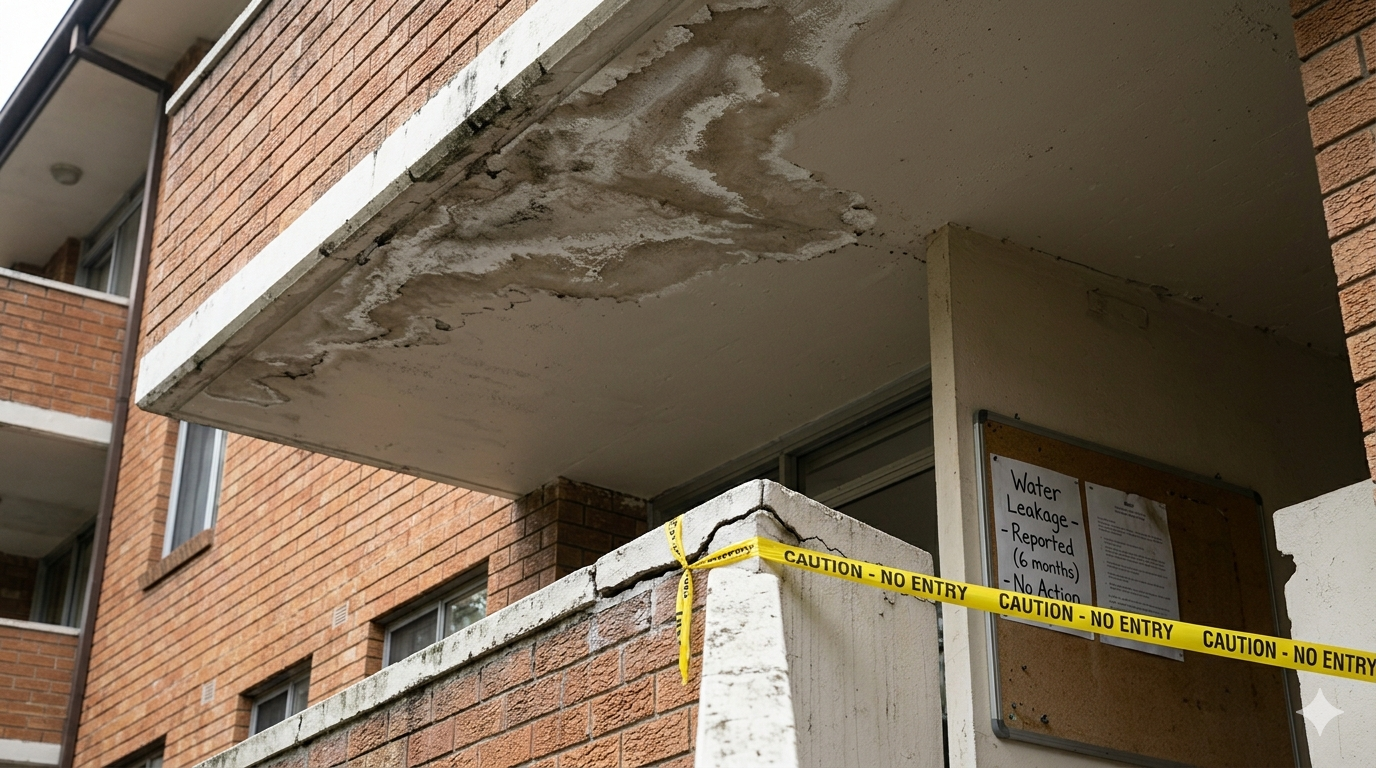
Water-related issues are particularly important, as they can lead to long-term damage and costly remediation if not addressed properly.
Buyers should pay close attention to repeated mentions of the same issue in strata committee minutes. A problem that appears across multiple years often indicates an unresolved or escalating defect rather than a minor maintenance item.
In some cases, buildings may also be involved in disputes with builders or developers regarding defect liability periods or rectification works.
3. Disputes, By-Laws and Management Problems
Beyond financial and physical issues, strata reports can also reveal governance and management concerns.
Red flags in this category include:
Frequent disputes between owners or tenants
Ongoing litigation involving the owners corporation
Difficult or overly restrictive by-laws
Poor attendance or instability in strata committee meetings
Complaints about strata management performance
Management issues may not seem urgent at first glance, but they can significantly affect day-to-day living. Disputes can slow decision-making, delay maintenance, and create ongoing tension within the building.
By-laws are also important. For example, restrictions on pets or short-term letting can affect both lifestyle and investment value. Buyers should always check whether the by-laws align with their intended use of the property.
4. Why Legal Review Before Exchange Matters
Strata reports are often lengthy and written in technical language, which can make it easy for important issues to be overlooked.
A key risk for buyers is focusing only on surface-level information, such as fees or general comments, without understanding the broader implications of financial or legal warnings in the report.
A conveyancer or solicitor can help identify:
Whether financial risks may lead to future levies
Whether defect issues suggest ongoing liability
Whether disputes could affect ownership enjoyment or resale value
Whether by-laws create restrictions that impact the buyer’s plans
Early legal review may also provide an opportunity to negotiate price adjustments or request further disclosure before contracts become binding.
Ultimately, a strata report should not just be ordered and filed away. It should be actively reviewed as part of the due diligence process before exchange.

Conclusion
Strata reports can reveal far more than most buyers expect. Financial instability, building defects, and governance issues may all be present in the records long before they become visible in the property itself.
By paying attention to these red flags, buyers can better understand potential future costs and risks. More importantly, reviewing the report with proper legal guidance before exchange can help prevent costly mistakes and improve negotiating position.
References
NSW Fair Trading – Strata Information and Records
https://www.nsw.gov.au/housing-and-construction/strata/serving-on-a-committee/accessing-strata-records?utm_source=chatgpt.com
NSW Fair Trading – Buying into a Strata Scheme
https://www.nsw.gov.au/housing-and-construction/strata/buying-into-a-strata-scheme?utm_source=chatgpt.com
Strata Schemes Management Act 2015 (NSW)
https://legislation.nsw.gov.au/view/html/inforce/current/act-2015-050?utm_source=chatgpt.com
Disclaimer
This article is general information only and does not constitute legal advice. Buyers should obtain independent legal advice tailored to their circumstances before acting on any information contained in a strata report.